
Long Beach Resident Lookup Records
A good resident lookup starts with the question a record can answer. An assessor line describes a parcel. A deed names the parties. A court index shows a case connection. A vital record confirms an event through the right copy class, business filings and licenses show formal roles, and directories and newspapers add historical context, with the table keeping each claim separate.
| Record | What It Confirms | Where to Search | Access |
|---|---|---|---|
| Assessor parcel card | AIN, situs, legal description, values, property traits | LA County Assessor | Free address/AIN search |
| Recorder instrument | Grantor, grantee, document type, recording identity | LA County RR/CC | Counter or request; no web index |
| Court case access | Party role, case, hearings, events, disposition | LA Superior Court | Case-type limits |
| Vital record | Birth, death, public marriage, or divorce record facts | City, county, CDPH, or court | Copy class and eligibility rules |
| License or business filing | Entity role, license status, agent, filing address | California SOS or DCA | Free official search |
| Directory or newspaper | Historical name, address, school, family, or life event clue | LBPL and local repositories | Digital, microfilm, or appointment |
An address changes the plan. With one in hand, take the parcel route first. A former classmate or relative fits better through the library, court, or vital route. Any check of your own current status belongs to you and the official self-service tool, not to an anonymous name search.
Long Beach Court Search Fields
The Los Angeles Superior Court Find a Case gateway splits by case type rather than offering one all-purpose name box. Civil, criminal, family, probate, and traffic are separate routes. The controls differ too. A Long Beach Courthouse assignment does not mean every case tied to a Long Beach person is filed there.
| Case type | Navigation tile for civil, criminal, family, probate, small claims, traffic, and other routes. |
|---|---|
| Case number | Exact identifier in case-number mode; format depends on court and case type. |
| Party or name | Available in party mode where the application allows it. |
| Filing date or year | Optional or required in some index searches; narrows same-name results. |
| Courthouse or district | Filter that depends on the application and filing type. |
A typical public result can include the case number, title, filing courthouse, date, case type, party names and roles, counsel, status, register-of-actions events, hearings, judicial department, and disposition or judgment entries. Remote document access varies. A docket tracks case events. It is not the full file or a finding of wrongdoing.
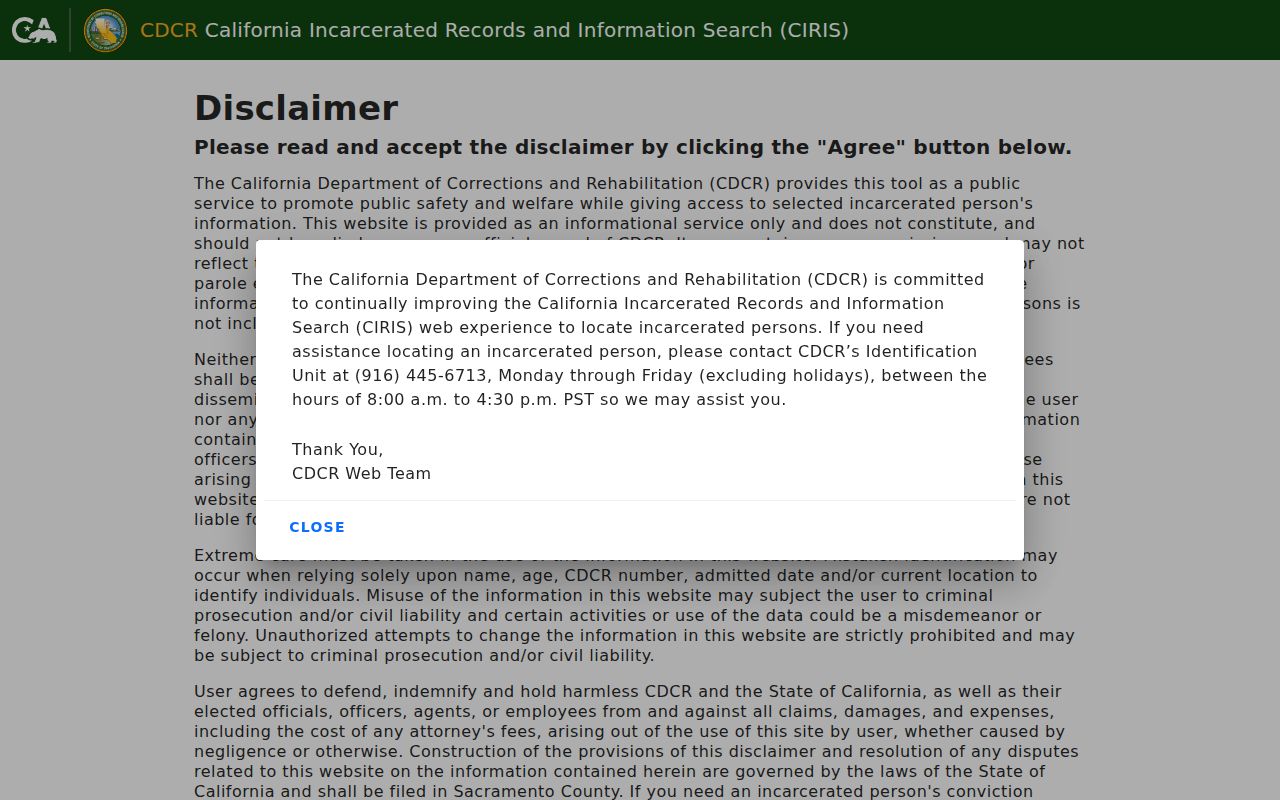
The California Department of Corrections and Rehabilitation locator demonstrates a separate official person-confirming route for custody records.
Separate a namesake with the case number, party role, courthouse, filing year, and public disposition. Details settle it. Sealed, juvenile, adoption, confidential family, and protected medical material may not appear remotely.
Long Beach Resident Same-Name Checks
A full name is a lead, not proof. Long Beach records can carry initials, married and maiden names, Spanish compound surnames, spelling variants, trusts, entities, and OCR errors. Start with two anchors. Address plus year, spouse plus occupation, case number plus courthouse, or AIN plus legal description all work. Keep the original spelling. Add variants as separate search terms.
Court records compare on party role, case type, filing year, courthouse, counsel, and disposition. A parcel compares on AIN, legal description, and recording reference, while a license or business compares on file number, status, entity role, and filing date. A business agent address is not a personal address. An old public filing can stay visible long after a move.
- Index
- A finding aid or set of record labels, often with less detail than the record image.
- Image
- The scanned or copied document page that carries the source’s fuller wording and marks.
- Certified copy
- A copy issued by the custodian with certification for an authorized purpose; it is different from a screen result.
Say so when a match stays unclear. A careful Long Beach resident lookup can honestly end at "same name, not resolved" rather than a false identification. Use a new custodian next.
Long Beach Vital Records Routes
Long Beach Health and Human Services serves as local registrar for births in Long Beach from 1905 to the present and deaths in Long Beach from 2002 to the present. Los Angeles County RR/CC and CDPH cover other county and statewide routes. Confirm the event place first. The mailing city is not always the event city.
California issues two copy classes. An informational copy of a nonconfidential birth, death, or public marriage record is open to anyone and is stamped as not valid to establish identity. An authorized copy needs a listed eligible requester and a sworn statement. Mailed authorized requests require notarization. Confidential marriage records stay limited to a spouse or a court order under Family Code sections 509 through 511.
Birth and death applications ask for the registrant or decedent, event date and city, parent names where applicable, copy type, applicant relationship, contact details, signature, identity, and payment. Fees change. Processing times change too. Use the current Long Beach Health page, the county order page, or CDPH forms at the time of request. That avoids a rejected application.
Long Beach Resident Copy Choices
California takes a two-track approach instead of a single century-long seal. Health and Safety Code sections 103525 and 103526 sort the products from the people allowed to request them. The code separates the copy types. It also limits who may request them. An informational copy is public. That marking means it cannot prove identity. An authorized copy is different. It can establish identity, so only qualified applicants may obtain it.
For a mail request, the authorized applicant signs under penalty of perjury. The sworn statement must also be acknowledged before a notary. In person, the instructions may let the applicant execute the statement before authorized staff. The relationship choices on the application control. The form and custodian note that a payment can be retained as a search fee. That applies even when the event is not found.
Divorce records follow a court path. CDPH's Certificate of Record covers divorces filed from 1962 through June 1984. The certificate lists names, county, case number, and filing date. It is not the decree or its terms. Any resident lookup that cites the certificate should label that difference clearly.
Verifying One Long Beach Resident
A narrow task works best when one person is the goal. Anchor the name to a lawful record first. Then test spelling variants and check a second custodian. The search does not need every possible source in the Long Beach residents directory, just two compatible records that answer the same identity question without crossing a privacy boundary.
- Write the name, known address or neighborhood, approximate year, spouse or relative, business, school, or case clue.
- Search the appropriate official index. Use the assessor by address or AIN, not by an advertised owner-name mode.
- Test name variants in court, state license, business, vital, or historical sources, using date and role filters.
- Compare the record’s relationship, date, jurisdiction, and stable identifier with the first anchor.
- Order the exact certified copy, pleading, deed, or file only when the source and access rules support it.
- Record what the evidence does not prove, including present occupancy, private household members, and protected addresses.
When an address is the starting point, the separate Long Beach by-address workflow can supply the parcel and historical street context. When a family-history question turns on printed volumes instead, the city-directory collection provides the library and archive route for past residents of Long Beach.
Long Beach Resident Categories
Different needs call for different official routes in the Long Beach residents directory. For an heir, locate the probate case in Los Angeles Superior Court. Then compare public petitions, orders, obituary notices, and deeds. A probate address may be a service or mailing address, and it may be outdated. An estate document names a legal relationship, not an automatic residence.
For a birth-parent search, California adoption records are confidential. The California Department of Social Services adoption-services route is the proper path. The mutual-consent route is too, not a public directory claim. For a former classmate, LBPL has digitized Long Beach Polytechnic, Woodrow Wilson, and David Starr Jordan yearbooks. The years cover selected spans from the early 1900s through the 1950s. A directory or newspaper can corroborate the listing. A school entry is historical context, not a current location.
For a business owner, compare California bizfile. Add LA County fictitious-business-name filings, Long Beach business-license information, and a professional license. Each may show a formal role or business address. None should be silently relabeled as a home.
Long Beach Resident License Clues
The California Secretary of State bizfile search accepts a name or file number. Advanced refinements are available. A filing can show an entity name, status, agent, addresses, shares, purpose, and filing metadata. Ordinary search and filing PDFs are free. Certificates and some filing actions use account or order steps.
The DCA professional-license search can return a licensee or business name. It may also show a license number, status, dates, and discipline links depending on the board. The Alcoholic Beverage Control lookup reports license locations by city, ZIP, county, or census tract. Long Beach Finance's business-license route adds a local operating-address layer. Use filing date, license status, and address type to avoid confusion. This keeps a formal business connection distinct from a personal residence.
The California DCA license search gives a Long Beach resident lookup a state-level professional record route.
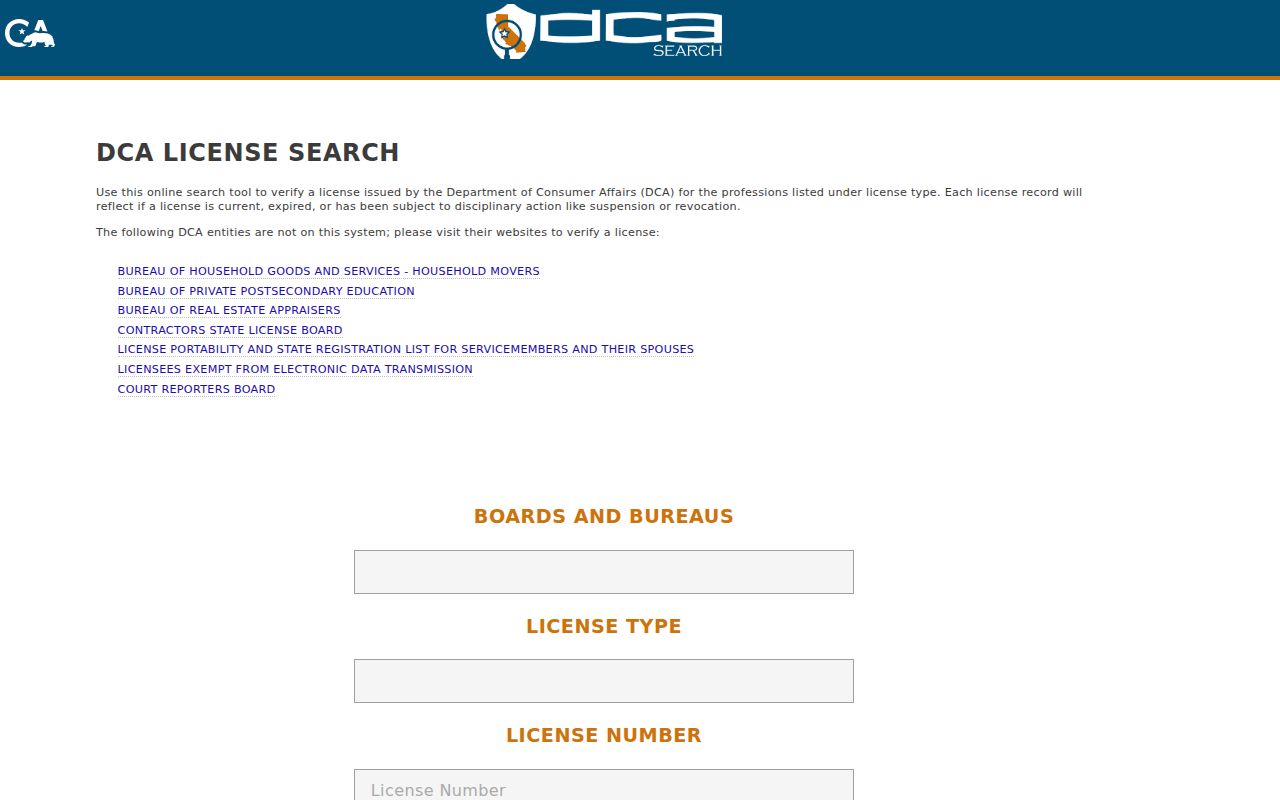
A status page is a dated official result. When a correction is needed, preserve the license number and the board's exact wording.
Long Beach Lookup Privacy Shields
Safe at Home can provide a designated mailing address for eligible survivors. It also serves specified public-facing workers. California voter protections and DMV restrictions interrupt ordinary address trails. Redacted recorded data, sealed court files, and vital-record eligibility rules interrupt them too. A missing or substitute address may be a deliberate safety measure. That means a Long Beach residents directory entry is not the whole story.
The California Delete Request and Opt-out Platform, or DROP, opened January 1, 2026. The Attorney General reported more than 225,000 enrollments in its first six weeks. Registered brokers begin recurring access and processing duties August 1, 2026. A commercial-data deletion request affects covered broker data only. It does not rewrite the original county or state record.
Use the custodian. Corrections belong with the assessor, RR/CC, court clerk, election office, vital-record issuer, licensing board, or originating business. Keep the record number, date, and incorrect field.
Long Beach Resident Lookup Limits
California's Public Records Act opens existing agency records. But it does not require Long Beach to create a new resident list or disclose exempt personal data. The CPRA determination period is ordinarily 10 days. A written extension of up to 14 additional days is allowed for unusual circumstances. Inspection is generally free. Copy or extraction costs can apply under the statute or a specific record rule.
Voter information has its own Elections Code section 2194 request and purpose rules. Recorded documents carry identity and address protections. DMV data is restricted by the Driver's Privacy Protection Act. Court rules limit remote access to sensitive case types. Public visibility of one field in a resident lookup never authorizes intimidation, impersonation, doxxing, or attempts to defeat a confidentiality program.
Lawful use. A Long Beach resident lookup is for personal, lawful research, family history, civic information, and safe reconnection. Never use a record to stalk, harass, intimidate, or harm a person.
Note: the strongest match states its source, date, relationship, and limit without claiming more than the record says.