
Long Beach City Directory Collections
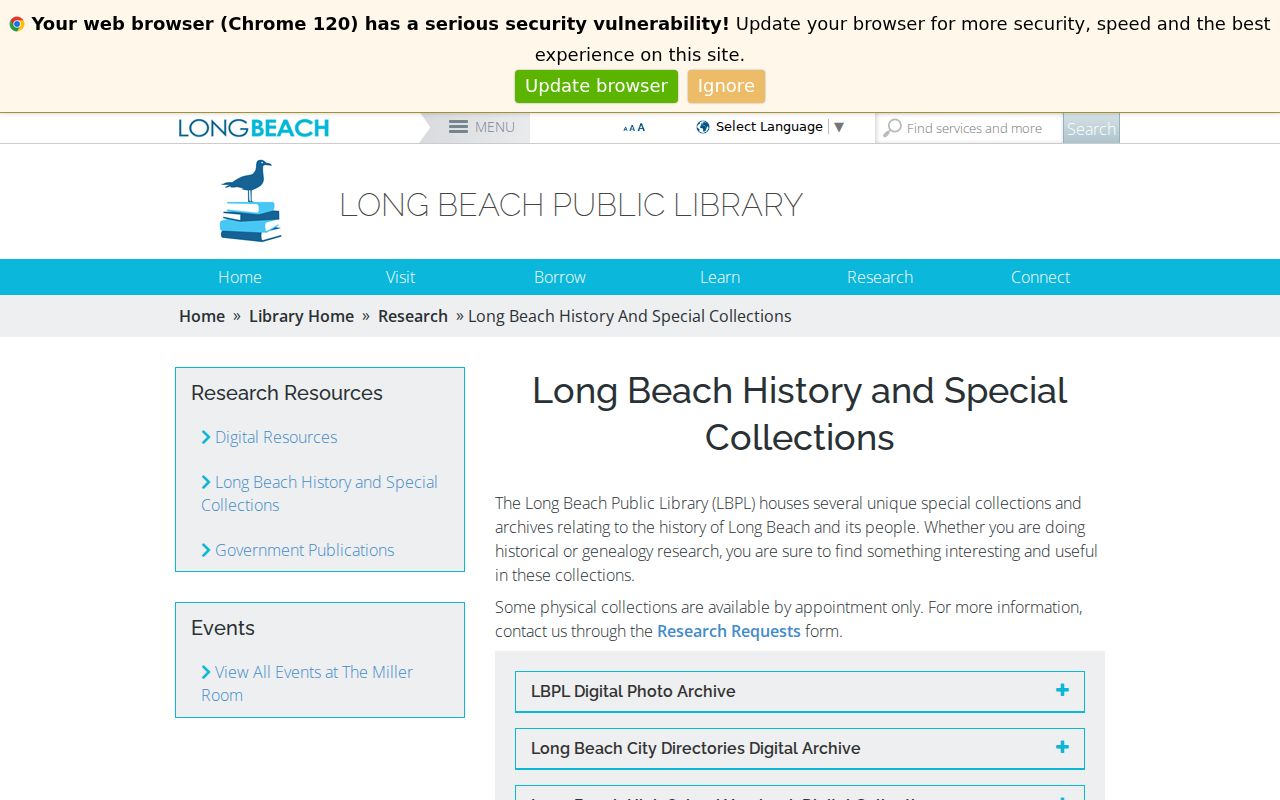
The Long Beach Public Library is the primary local custodian for the historical shelf. Its Long Beach History and Special Collections page describes printed directories, newspapers, clipping files, photographs, artifacts, high-school yearbooks, cultural-heritage surveys, and Sanborn fire-insurance maps. The verified digital R. L. Polk archive covers most years from 1899 through 1969. “Most years” matters: the run should not be described as an uninterrupted annual series.
| Collection | Years | Where Held | Access |
|---|---|---|---|
| R. L. Polk Long Beach volumes | Most years, 1899-1969 | LBPL Digital Archive | Free web search and scan view |
| Polk and other Long Beach directories | Most volumes; complete run not published | Billie Jean King Main Library | Appointment and in-library use |
| Local newspaper microfilm | 1900s to present by title, with early gaps | BJK Main Library | In-library research |
| Sanborn fire-insurance maps | 1888-1950 local microfilm | LBPL and some LOC digital sheets | Map and building context |
| Long Beach high-school yearbooks | Select early 1900s-1950s years | LBPL Digital Archive and library | Searchable where OCR reads text |
Physical access is at Billie Jean King Main Library, 200 W. Broadway, Long Beach. LBPL asks researchers to make an appointment at 562-570-7500, and Long Beach History Collection materials are for in-library use. The digital resource entry is linked from the library’s digital-resources catalog. Images can be saved or printed with library credit, while reproduction or publication can require permission and city terms.
The LBPL history and special collections page is the local starting point for directory shelf, newspaper, and map research.
The collection is broader than a genealogy database. It supports a search from a name to an address, an address to a listed adult, or a building to the people and organizations associated with it.
Long Beach City Directory Digital Archive
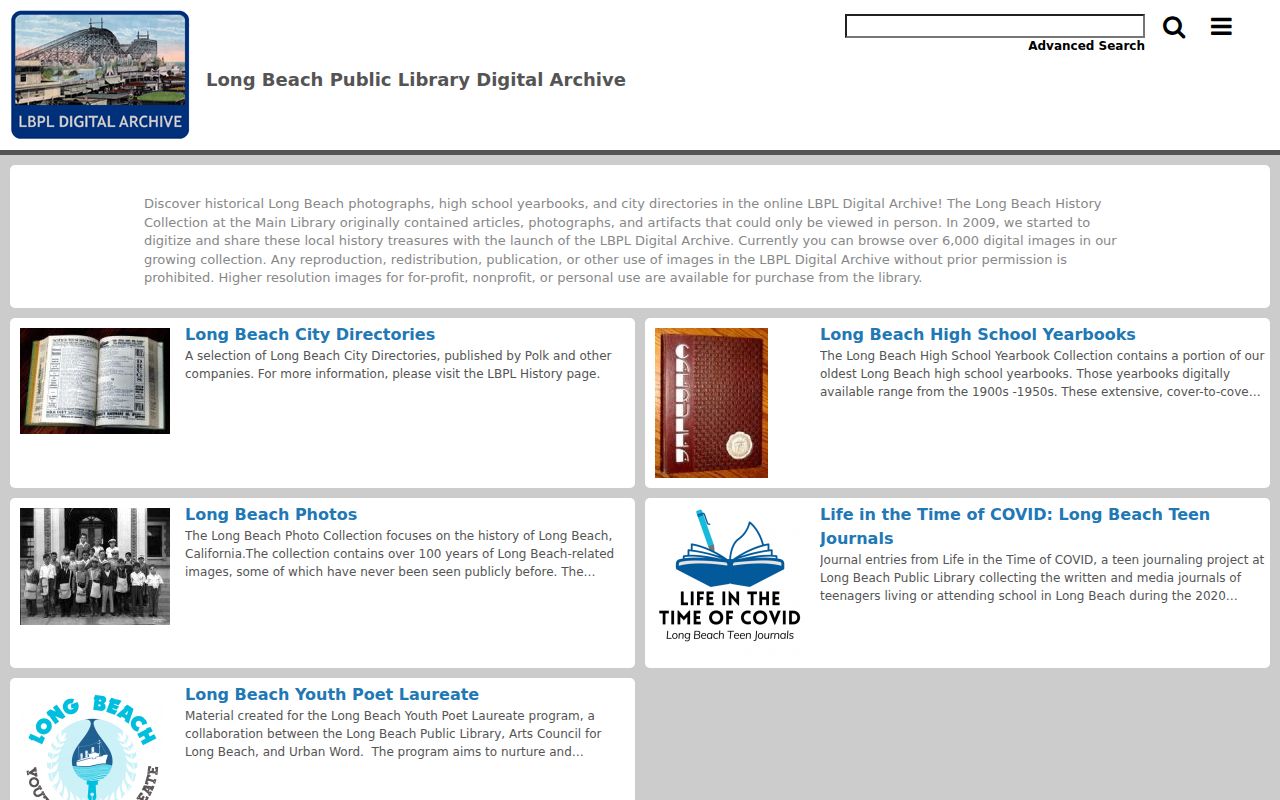
The Polk Digital Archive is the direct online gateway for the scans. LBPL says the archive contains more than 4,000 digital images, with additions continuing, and that the collection launched in 2009. Keyword search can find surnames, addresses, and terms that OCR recognized. The scanned page remains the evidence because broken type, initials, abbreviations, and page position can defeat a text hit.
Search a surname first, then browse adjacent pages for relatives or same-name entries. Search the street number and abbreviated street name when the volume supports it. Save the directory year, printed page, repository, and exact spelling. If a hit looks wrong, inspect the front matter and the page image before changing the transcription.
[INSIDER TIP] Search by surname and address, then turn to the page image. OCR can miss an initial or read a broken line as a different name.
Open the LBPL digital collections search to browse the scanned Polk material.
Do not promise a specific volume or named entry when the library landing page does not publish a volume-by-volume inventory. A missing year may be a shelf gap, a scan gap, an OCR failure, or a search spelling issue.
Reading a Long Beach City Directory Entry
A scanned Long Beach entry is compact, but its marks can carry several clues. LBPL’s historical budget description confirms that the digitized material can be searched by name or address and may provide profession, work location, and spouse. The exact fields vary by volume and household. Use the volume’s abbreviation key before reading a letter as a fact.
| Name | Surname, given name, middle initial, and sometimes spouse in parentheses. |
|---|---|
| Widow or widower mark | A notation that can lead to a death notice or obituary. |
| Occupation or place of work | Historical context that helps separate same-name entries. |
| Residence | House number and abbreviated street, with conventions that vary by year. |
| Business entry | Firm, trade, proprietor, officers, or business address where printed. |
| Street section | A reverse route from house number to listed adult when present. |
- Criss-cross directory
- A street-order or reverse section that moves from address to listed occupant instead of surname to address.
- Householder index
- A listing centered on the named adult or head of a household, not every person who lived there.
- Abbreviation key
- The volume’s legend for street, residence, relationship, occupation, and other marks. Photograph or transcribe it first.
- Page citation
- Volume year, title, printed page, repository, access date, and exact wording that another researcher can check.
The Historical Society of Long Beach collections page supplies a second local archive when a directory entry needs community context.
Historical Society holdings are a supporting archive, not a promise that every name has a searchable online record. Verify appointment, reproduction, and current fee terms with the repository.
Long Beach City Directory Library Access
Billie Jean King Main Library is the practical fallback when the digital archive misses a year, a reverse section, or a readable page. Ask staff for the exact call number, physical or microfilm run, volume year, scan policy, and whether the needed local-history material is available by appointment. LBPL also provides newspaper microfilm that can supply an obituary, address notice, society item, or property story.
The newspaper run is useful because a directory disappearance has several possible meanings. A person may have moved, died, changed surname, gone unlisted, or simply fallen into a missing year. Search the Press-Telegram and its predecessor titles around the last and first directory appearances. The Daily Telegram, Evening Tribune, Long Beach Press, Independent, and Press-Telegram have different date spans and early gaps, so cite the title and issue date.
When a local question reaches beyond LBPL, the Historical Society of Long Beach, CSULB Special Collections, Rancho Los Cerritos, Rancho Los Alamitos, and the California State Archives provide different records. Repository rules matter. An oral history, photograph, or private paper is context, not automatic proof of a current address.
Long Beach City Directory Context at CSULB
CSULB Special Collections and University Archives adds local history beyond the printed volumes. Named holdings include the Long Beach and Local History Collection and the Joan Hotchkis and Bixby Family Papers, spanning the 1830s through the 2000s. The Virtual Oral/Aural History Archive includes roughly 343 narrators whose remembered lives reach from the 1890s through the 1990s.
The reading room serves the community by supervised appointment. Materials include correspondence, diaries, maps, organization and university records, photographs, audiovisual items, campus yearbooks, and publications. A directory name may become more meaningful when a local paper, family paper, map, or oral-history recording supplies a spelling, nickname, neighborhood, or organization link.
Long Beach’s diverse history also affects search technique. Rancho-era names, Black migration, Cambodian settlement, and many other community histories create compound surnames, married-name changes, initials, transliteration, and anglicized spellings. Preserve the printed form and search variants rather than silently standardizing a name.
Use the CSULB collection inventory when a Long Beach volume clue points to a university, family, or community archive.
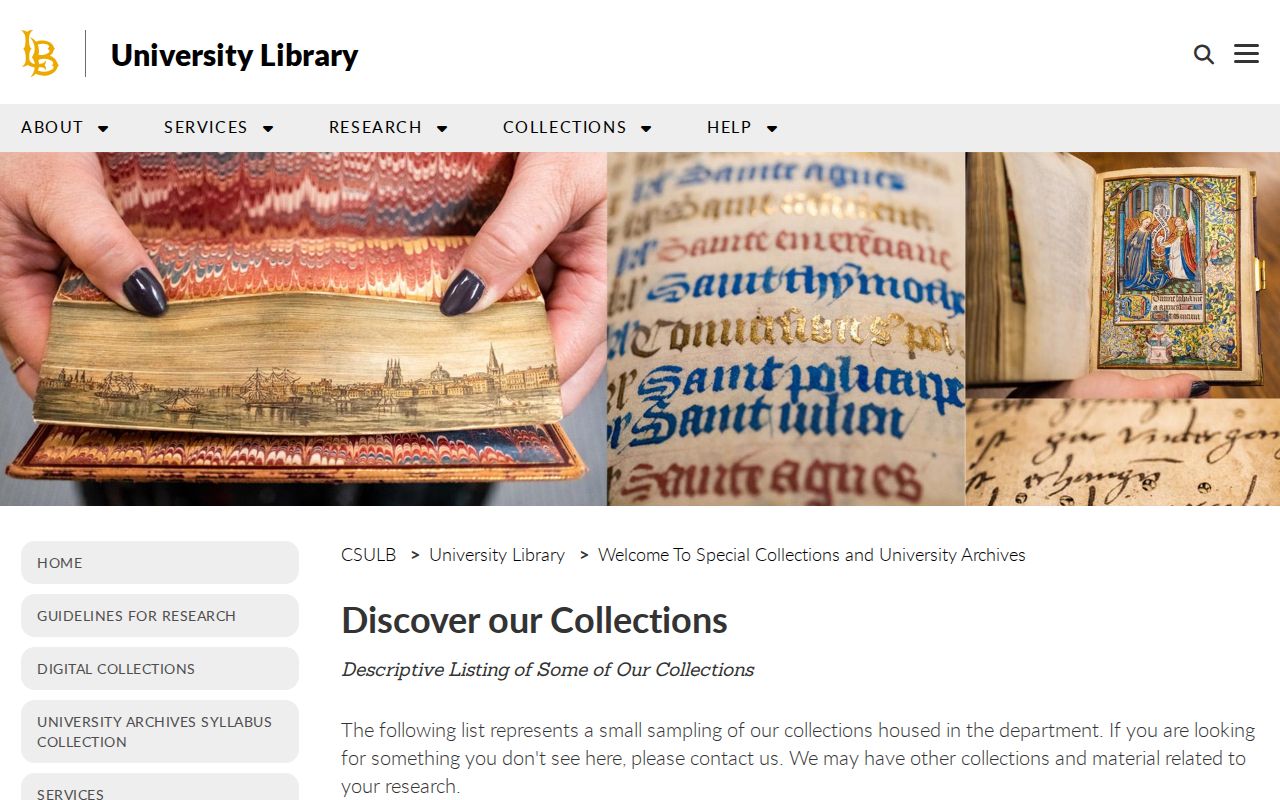
CSULB notes that transfer to a new digital platform means not all material is organized or searchable online. Treat the catalog as a route to the reading room, not a complete name index.
Tracing a Long Beach City Directory Household
A household trail works best when directory years fill the spaces between federal census dates. The directories offer near-annual address continuity and occupation clues. Census schedules add ages, relationships, birthplace, citizenship, and adjacent households. Neither source is a deed, and neither proves every person at an address.
- Normalize the target address and search both modern and former street names, including California Avenue and Martin Luther King Jr. Avenue where the 1986 change applies.
- Find the nearest Polk year by surname, record spelling, spouse, address, and printed page, then inspect nearby entries.
- Move through successive editions, marking first appearance, last appearance, address changes, same-name conflicts, and missing volumes.
- Reverse the direction with a street section when the surname is unknown, and record house numbers in sequence.
- Pair directory findings with the public 1900, 1910, 1920, 1930, 1940, and 1950 census schedules.
- Search local newspaper microfilm, yearbooks, deeds, permits, Sanborn maps, probate, and cemetery evidence around a gap.
Long Beach’s directory and census layers complement rather than duplicate each other. The Polk run through 1969 also bridges the period after the 1950 census that remains closed under the 72-year release rule. The final disappearance should remain a date bracket until another record explains it.
Long Beach City Directory Address Changes
Sanborn maps give the building layer. LBPL’s local run covers 1888 through 1950 on microfilm, while the Library of Congress collection offers selected digital sheets. A Sanborn page can show footprint, use, materials, outbuildings, street context, and sometimes number changes. It does not name an occupant.
Long Beach’s history makes map comparison worthwhile. The 1921 oil discovery brought rapid growth and construction. Historic districts preserve different building eras, including Belmont Heights homes dating to 1905, Rose Park Craftsman development from roughly 1910 through 1922, and Grant Neighborhood’s automobile-suburb core from 1928 through 1930. Those years tell a researcher which directory, permit, census, and map editions may be most useful.
The city’s cultural-heritage surveys cover about 600 pre-1940 buildings across seven neighborhoods. A survey can link a historic address to a builder, early owner, directory citation, or neighborhood change. Compare it with the printed entry and legal parcel rather than assuming the survey provides a complete resident list.
Long Beach City Directory Limits
A city directory is a published snapshot. It may omit children, boarders, many adults, transient people, unlisted households, and people missed by the publisher’s process. A business address can look like a home address. A spouse in parentheses can be a clue, not a full family record. A missing name can reflect OCR, an absent year, a move, death, a new surname, or simple omission.
Preserve the evidence in layers: exact transcription, volume year, page image, address, repository, and related record. When a historical match needs a present-day check, the official parcel, court, vital, license, or other custodian route should do that work. The modern street-by-street material is handled on the Long Beach by-address page, while a one-person identity check belongs to the separate resident lookup.
Note: a directory year can bracket an arrival or departure, but it cannot by itself prove the precise move date or every person who shared the address.