
Finding the Long Beach Residents Directory
Long Beach records each answer a different question. An assessor parcel card places land and lists an AIN. It also covers use type, values, building traits, and a legal description. A deed names the parties to a recorded instrument. A city directory may list an adult, spouse, occupation, and address for a past year. A court docket ties a name to a case event. A vital record confirms an event only through its custodian and copy class. None of these sources is a roster of everyone at an address.
Start small instead. A known address points to the Assessor portal. A known person may lead to a state license. A person may also point to a business filing, court index, or library directory. Family history can call for newspapers, yearbooks, probate files, or cemetery sources. A narrow question saves time and keeps a lawful search from outrunning the evidence.
- Write down the name, address, date range, spouse or business clue, and the exact question.
- Use the LA County Assessor Portal or map to turn a known address into an AIN and legal description.
- Check the record keeper that fits the question: court, voter, vital, license, deed, permit, or library.
- Compare two independent facts, such as an address and year, before treating a name as the same person.
- Request an existing record when the needed index is not online, and ask for inspection when copies are not needed.
Long Beach Resident Records Offices
Long Beach splits its residents directory records among city, county, state, and court custodians. The City Clerk answers council, contract, and departmental records requests. Community Development keeps permit and planning material keyed by address. Los Angeles County holds recorded real estate, assessment, tax, election, probate, and many vital-record channels. California adds statewide license, voter-status, privacy, and custody tools.
There is no separate municipal court or city deed office. Local cases belong to the unified Los Angeles Superior Court. Real-property documents are county records. That division matters when a search jumps from a city permit to a deed. It also matters for a local birth record. That record may point to a county or state application. Know the desk before you search.
LA County Elections
Election Information Section
Room 2013, Norwalk
800-815-2666, option 4
Long Beach Address Records Start with Parcels
A known address makes the LA County Assessor Portal the best first key. The public search takes an AIN or address. Results can expose the situs, parcel status, use, tax-rate area, assessment values, building and land facts, legal description, and parcel-map links. The portal is free and advertises no owner-name search. The public card is also no household roster.
Geography comes from the LA County Assessor Map. Search or navigate to the parcel. Click the polygon. Note the AINs of touching or facing parcels. Parcel, recent-sales, street, and aerial layers show land relationships. They do not show that an owner, mailing recipient, or permit applicant occupies the property.
| Search by AIN or Address | Main text or autocomplete search for a parcel or street address. |
|---|---|
| Basic Search | Primary AIN and address mode. |
| Legal Search | Alternate legal-description route; exact fields are rendered by the application. |
| Map Search | Opens the county parcel viewer for spatial browsing. |
| Assessor Internet | Links to assessor public-information material. |
Keep situs and mailing addresses separate. Situs is where the parcel sits. Mailing is where tax notices go, which may be another city, a trust, an agent, or a PO box. A mismatch can hint at different ownership or contact patterns, but it proves neither occupancy nor vacancy.
Long Beach Deed Records Need a Party Name
Los Angeles County real-estate records reach back to 1850. The county offers no public Internet deed index and no open image library. The RR/CC index sorts by grantor, grantee, and year. A street address alone cannot start a deed search. Translate the address into an AIN, a legal description, and a known party name first.
At the Norwalk counter, searchers can view records, request copies, and work the historical and modern index areas. A mail request should state the document title, names, and recording year, or the years to search. The county allows twenty working days for mail processing. Online copy fulfillment works for a known document. It does not replace index discovery. This access quirk is one of the biggest facts in a Long Beach residents directory.
For a deed chain, search a known grantee in the likely purchase year. Capture the grantor, document number, recording date, and legal description. Then search that earlier grantor as a grantee in prior years. Trusts and quitclaims can break a simple sale pattern. Every instrument title and parcel reference matters.
Note: the missing online index is a county access choice, not proof that a Long Beach deed or owner record does not exist.
Current Long Beach Residents Directory Sources
Present-day resident research in Long Beach works best as comparing record relationships, not hunting one universal list. The sources here can surface a parcel, registered voter, filing party, permit contact, or organization link. Each custodian differs. Each has a different blind spot.
| Source | What It Lists | Keeper | Access |
|---|---|---|---|
| Assessor parcel roll | AIN, situs, use, values, legal description | LA County Assessor | Free address/AIN portal |
| Voter status and file | Personal status or lawful request results | California SOS and LA County Elections | Purpose-restricted |
| Recorded-document index | Grantors, grantees, liens, trusts, and releases | LA County RR/CC | Counter, mail, or known-copy order |
| City permits | Address, work type, applicants, inspections, status | Long Beach Community Development | Portal or records request |
| Business and license filings | Entity, agent, registrant, license status | City and California agencies | Free official searches |
A residents directory entry is only as good as its source label. Owner, voter, agent, applicant, and occupant mean different things. The Long Beach record tells you which relationship it captured. Its date tells you how current that label is. Shift to a single person, though, and the work changes.
| Official records | Commercial people-finder category | Best use |
|---|---|---|
| Named custodian, stated field, record date, correction route | Mixed feeds, uncertain freshness, possible namesake merges | Use the official source to verify a material fact |
| Access limits are visible and tied to law | Access and removal terms can vary by provider | Do not let a compiled result override the custodian |
The California Secretary of State bizfile search adds a formal entity and filing layer to Long Beach resident research.
Filing number, status, agent, and filing date turn a business name into a checkable frame.
Long Beach Voter Records Are Personal
California My Voter Status is a self-service portal, and only for your own file. It asks for a first and last name, birth date, and a conditional identity field. That could be a California driver license or ID number. Or it could be the last four digits of a Social Security number. A successful check can display registration status, party preference, polling place, ballot status, and election materials. It never shows ballot choices. And it is not an anonymous street browser. So it will not sweep a block of names for a Long Beach residents directory search.
Los Angeles County offers a formal named-search route with certified copies. The published request page lists a $5 per-name registration search and a $6.75 voter-history search. Certified copies run $1.50 for your own registration. For anyone else's, they run $6.75, subject to the lawful request process. The form collects full name, birth date, residence address, city, ZIP, contact details, and the required signature and payment information.
Elections Code section 2194 limits permissible uses of the voter file. It protects home addresses, phone numbers, email, unique identifiers, signatures, and similar fields. Safe at Home and confidential voter protections can leave a substitute address or none at all. So a blank result does not prove a person never lived at a Long Beach address.
The California My Voter Status tool is the official self-check route for a voter’s own Long Beach registration.
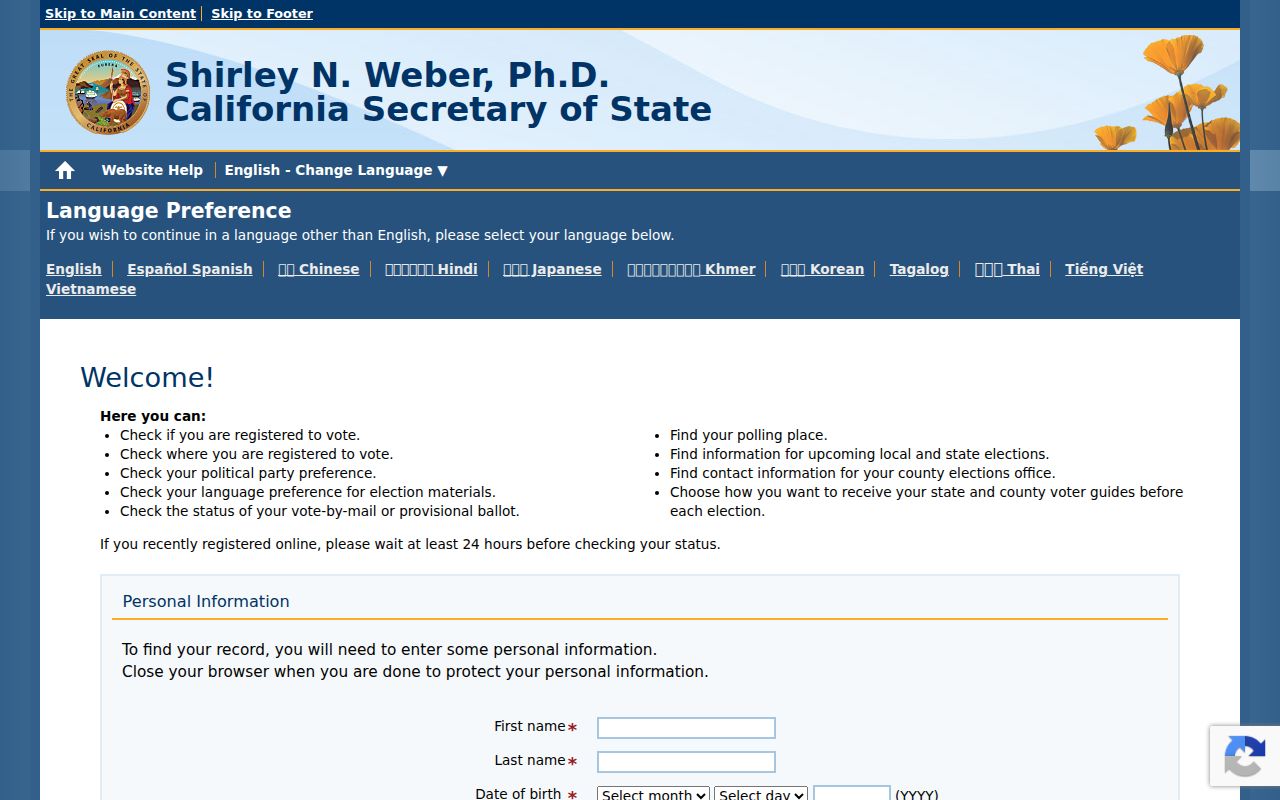
Those identity fields exist for verification only, not as a public resident record.
Long Beach Court Records and Probate
The Los Angeles Superior Court Case Access gateway splits its routes by case type. Civil, criminal, family, probate, small claims, and traffic each get their own path. A search can run on a case number or a party name. Filing year, courthouse, and district filters narrow it further. Results may show the case number, title, filing date, party roles, and counsel. Status, hearings, events, and disposition entries can appear too.
Long Beach cases are not heard by a city municipal court. The Long Beach Courthouse sits at 275 Magnolia Avenue. Assignment depends on case type and filing district. Remote access stays narrower than what a public counter can show. Sealed, juvenile, adoption, confidential family, protected medical, and redacted records remain off limits or restricted. To order a key pleading, bring the case number. Also bring the exact docket title or date. The clerk or the Archives and Records Center handles the order.
Probate can bridge a past owner to an estate, petitioner, personal representative, heir, or counsel. Even so, it does not prove every interested person lived at the property. Weigh the probate record against a deed or an obituary. A directory entry or another dated source helps too.
Note: a party-name hit shows a case connection. It is not the identity, conduct, or current location of a similarly named Long Beach resident.
The Los Angeles Superior Court case-access gateway is the official starting point for a public case index.
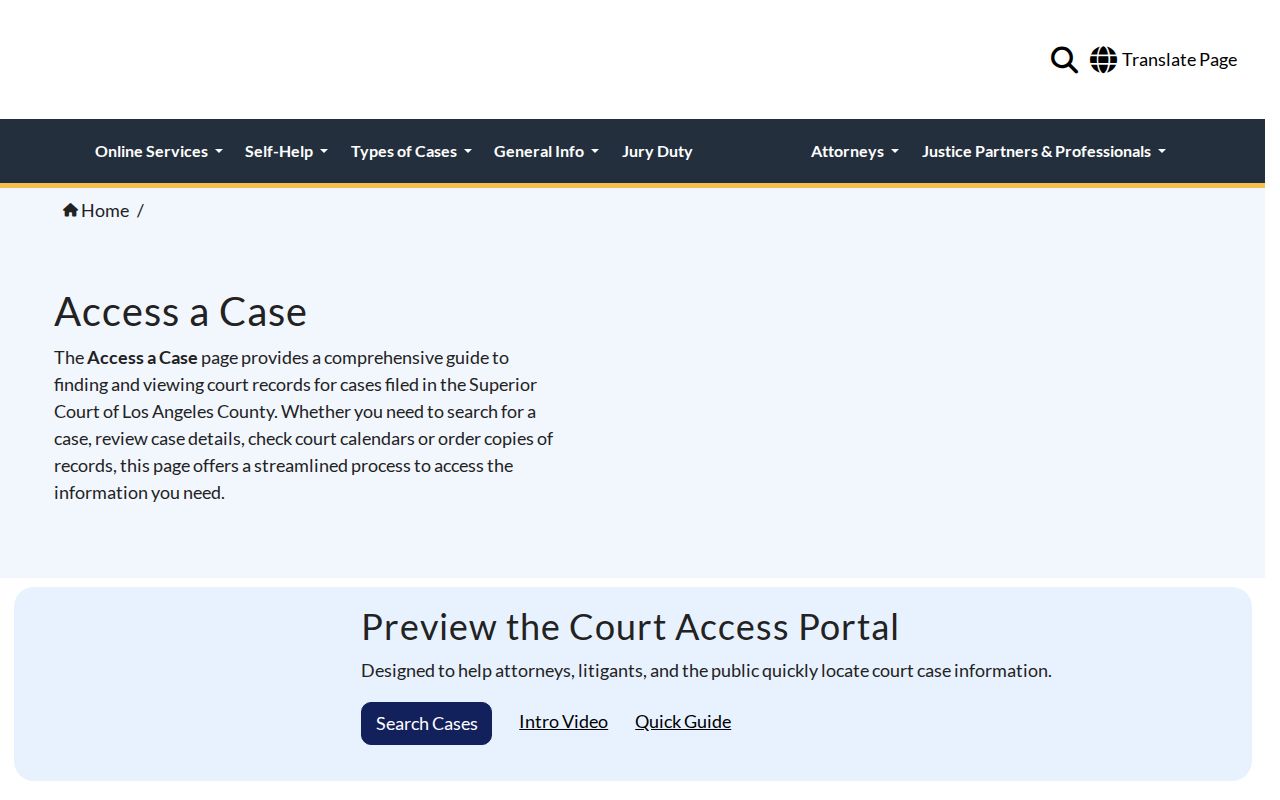
Give the clerk the case number and exact event title when a specific document is needed.
Long Beach Vital Records Take Different Routes
Birth, death, marriage, and divorce records do not travel one road. Long Beach Health and Human Services is the local registrar for births in Long Beach from 1905 to the present. It also holds deaths in Long Beach from 2002 to the present. Los Angeles County RR/CC and the California Department of Public Health cover county and statewide routes. They apply when the event happened elsewhere. A Long Beach ZIP code alone does not set the jurisdiction.
California splits certified copies into two kinds. An informational copy is open to the public for a nonconfidential birth, death, or public-marriage record. But it is marked as not valid to establish identity. An authorized copy demands an eligible requester and a sworn statement. Mailed authorized requests also need a notarized statement. Confidential marriage records stay limited to a spouse. A court order under Family Code sections 509 through 511 also works.
Divorce decrees live at the Superior Court, not the vital records office. CDPH can issue a Certificate of Record for divorces filed from 1962 through June 1984. That document is index-style, listing names, county, case number, and date. It is not the decree's terms. County, city, vendor, mail, and in-person channels each carry their own current forms. Fees, identity checks, and processing times differ too.
Long Beach Business Records Add Context
A person can surface through a Long Beach company. The same holds for a trade name. A professional license or a city business license works too. The entry may be commercial rather than residential. The California Secretary of State bizfile search can display an entity name and file number. It also shows status, agent, and filing addresses. Los Angeles County fictitious-business-name statements can tie a trade name to a registrant or entity. Long Beach Finance administers city business-license applications, renewals, taxes, fees, and inquiries.
The California Department of Consumer Affairs license search can show a licensee or business name, license number, status, and dates. Discipline links appear where a board supplies them. Treat business, agent, and license addresses as affiliation clues. They are not automatically homes. A filing can also stay public long after a person's role or address changes.
California's Alcoholic Beverage Control lookup adds a geographic angle. This traces commercial history in a Long Beach neighborhood. It does so without turning a business listing into a household claim for the residents directory. Its reports can be organized by city, ZIP, county, or census tract.
The California State Controller unclaimed-property search is another official name-based route for a Long Beach records workflow.
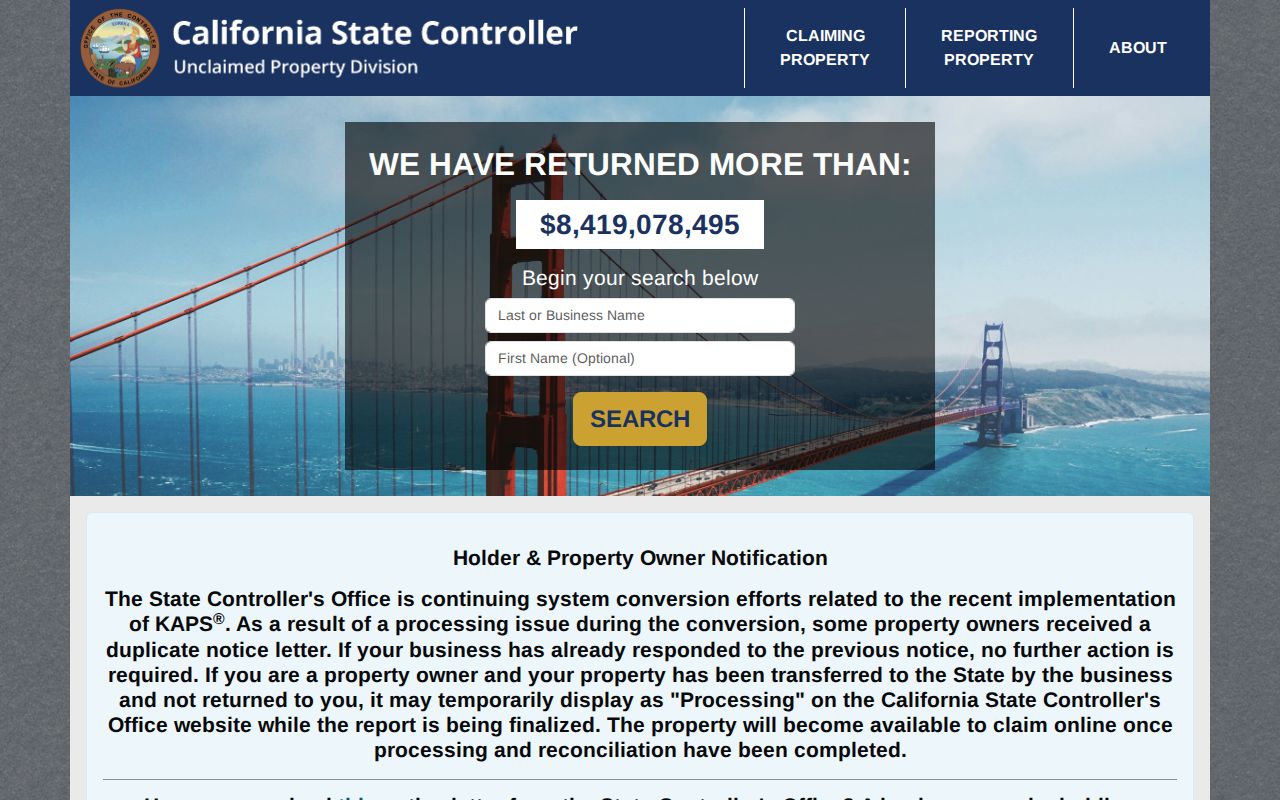
State search is free; the Controller's official claim instructions still govern.
Long Beach Privacy Records Need Shields
California privacy law sets the limits for any Long Beach residents directory. The rules shift depending on who holds the data. The CCPA and the California Privacy Rights Act give people the right to know, delete, correct, opt out of sale or sharing, and limit sensitive uses when a covered business holds their information. Government records work differently. A deletion request to a broker cannot amend an accurate assessor, deed, court, voter, or vital record. California's Delete Request and Opt-out Platform, known as DROP, opened on January 1, 2026, and the Attorney General reported more than 225,000 enrollments in its first six weeks. Registered brokers take on recurring access and processing duties on August 1, 2026. Start with the official DROP portal. The California broker registry lists who must comply. Both are the right first stops for commercial-data deletion. Safe at Home serves eligible survivors and certain public-facing workers through a designated mailing address and forwarding program, governed by Government Code sections 6205 through 6211 and 6215 through 6216. The program can shield a qualifying address in public records. It does not erase identity or every old record. Treat a protected gap as a safety feature.
Lawful use. Long Beach records are for personal, lawful research, family history, civic information, and safe reconnection. Never publish personal details to stalk, harass, intimidate, or harm another person.
Historical Long Beach Resident Directories
Long Beach resident history starts at the public library. Its Long Beach History and Special Collections page covers city directories, newspapers, clipping files, photographs, yearbooks, cultural-heritage surveys, and Sanborn fire-insurance maps. The verified digital Polk run covers most years from 1899 through 1969. Search by surname and address. Then read the scanned pages closely. OCR can miss initials and broken type. The Billie Jean King Main Library, at 200 W. Broadway, grants History Collection access by appointment. Staff can help locate physical or microfilm volumes, missing digital years, reverse sections, and local newspapers. Titles include the Daily Telegram, Evening Tribune, Independent, Long Beach Press, and Press-Telegram. Newspapers on microfilm add obituaries, notices, and address clues. The full historical shelf belongs on the Long Beach city directories page, where entry fields and year-by-year tracing get fuller treatment. One caution matters for past-residents work. A city directory is a dated listing, not a complete census. Children, boarders, and transient residents may be absent. Pair entries with census schedules through 1950, newspaper notices, yearbooks, deeds, permits, and Sanborn maps. Start at the Long Beach digital archive gateway.
Long Beach History Records Change
Long Beach's record trail predates the modern city. The community grew through Rancho Los Cerritos and Rancho Los Alamitos, Willmore City, incorporation changes, oil development, port growth, and later neighborhood expansion. County deeds can therefore carry county, rancho, township, or community context. That context can look nothing like a modern Long Beach address. Jurisdiction settles most mistaken identities. Earthquake history matters too. The March 10, 1933 earthquake killed 120 people. It caused an estimated $50 million in damage. Repair and reconstruction permits, city files, newspapers, historic surveys, and later directory entries can explain why a building or household seems to change all at once. The disaster also led to California's Field Act for earthquake-resistant public-school construction. Signal Hill complicates things. It is a separately incorporated city surrounded by Long Beach. A postal "Long Beach" clue, a neighborhood name, or a map connection can point to a different municipal permit or council custodian. Compare the parcel's city, the official boundary map, and the record office first. Only then call someone a Long Beach resident. Note: the safest Long Beach lookup preserves the record's date, source, relationship, and jurisdiction. It does not flatten every clue into a resident label.