
Finding the Long Beach Residents Directory
Long Beach records answer different questions. An assessor parcel card can locate land and show an AIN, use type, values, building traits, and a legal description. A deed names parties to a recorded instrument. A city directory may name an adult, spouse, occupation, and address for a past year. A court docket ties a name to a case event, while a vital record confirms an event only through the custodian and copy class that apply. None of those sources is a complete list of everyone who lives at an address.
Start with the smallest useful fact. A known address points to the Assessor and GIS map. A known person may lead to a state license, business filing, court index, or library directory. A family-history question may call for a newspaper, yearbook, probate file, or cemetery source. Keeping the question narrow saves time and avoids turning a lawful record search into a claim the evidence cannot support.
- Write down the name, address, date range, spouse or business clue, and the exact question.
- Use the LA County Assessor Portal or map to turn a known address into an AIN and legal description.
- Check the record keeper that fits the question: court, voter, vital, license, deed, permit, or library.
- Compare two independent facts, such as an address and year, before treating a name as the same person.
- Request an existing record when the needed index is not online, and ask for inspection when copies are not needed.
Long Beach Resident Records Offices
The Long Beach residents directory landscape is split among city, county, state, and court custodians. Long Beach City Clerk routes council, contract, administrative, and departmental records through its public-records process. Community Development holds address-keyed permit and planning material. Los Angeles County handles recorded real estate, assessment, tax, election, probate, and many vital-record channels. California supplies statewide license, voter-status, privacy, and custody tools.
There is no separate Long Beach municipal court or city deed office. Local cases belong to the unified Los Angeles Superior Court, and real-property documents are county records. That division matters when a search moves from a city permit to a deed, or from a local birth record to a county or state application.
LA County Elections
Election Information Section
Room 2013, Norwalk
800-815-2666, option 4
Long Beach Address Records Start with Parcels
When an address is known, the LA County Assessor Portal is the cleanest first key. Its public search accepts an AIN or address, and its result can expose the situs, parcel status, use, tax-rate area, assessment values, building and land facts, legal description, and parcel-map links. The portal is free and does not advertise an owner-name search. The public card also is not a household roster.
Use the LA County Assessor Map to add geography. Search or navigate to the parcel, click the polygon, and record the AINs of parcels that touch or face it. The map can show parcel, recent-sales, street, and aerial layers. Those layers establish land relationships. They do not establish that an owner, mailing recipient, or permit applicant occupies the property.
| Search by AIN or Address | Main text or autocomplete search for a parcel or street address. |
|---|---|
| Basic Search | Primary AIN and address mode. |
| Legal Search | Alternate legal-description route; exact fields are rendered by the application. |
| Map Search | Opens the county parcel viewer for spatial browsing. |
| Assessor Internet | Links to assessor public-information material. |
Keep situs and mailing address separate. Situs is where the parcel sits. Mailing is where tax correspondence goes and may point to another city, a trust, an agent, or a PO box. A mismatch can suggest a different ownership or contact pattern, but it proves neither occupancy nor vacancy.
Long Beach Deed Records Need a Party Name
Los Angeles County real-estate records reach back to 1850, but the county does not offer a public Internet deed index or open web image library. The RR/CC index is organized by grantor, grantee, and year. A street address alone cannot start the deed search. Translate the address into an AIN, legal description, and known party name first.
At the Norwalk counter, researchers can view records, request copies, and work through the historical and modern index areas. A mail request should give the document title, names, and recording year, or the years to search. The county states a 20 working day mail process. Online copy fulfillment can supply a known document, but it does not replace index discovery. This access quirk is one of the most important facts in a Long Beach residents directory.
For a deed-chain question, search a known grantee for the likely purchase year. Capture the grantor, document number, recording date, and legal description. Then search that earlier grantor as a grantee in prior years. Trusts, estates, reconveyances, and quitclaims can interrupt a simple sale pattern, so each instrument title and parcel reference matters.
Note: the absence of an online index is a county access design choice, not proof that a Long Beach deed or owner record does not exist.
Current Long Beach Residents Directory Sources
Present-day resident research works best as a comparison of record relationships, not as a search for one universal list. The sources below can identify a parcel, registered voter, filing party, permit contact, or organization connection. Each has a different custodian and a different blind spot.
| Source | What It Lists | Keeper | Access |
|---|---|---|---|
| Assessor parcel roll | AIN, situs, use, values, legal description | LA County Assessor | Free address/AIN portal |
| Voter status and file | Personal status or lawful request results | California SOS and LA County Elections | Purpose-restricted |
| Recorded-document index | Grantors, grantees, liens, trusts, and releases | LA County RR/CC | Counter, mail, or known-copy order |
| City permits | Address, work type, applicants, inspections, status | Long Beach Community Development | Portal or records request |
| Business and license filings | Entity, agent, registrant, license status | City and California agencies | Free official searches |
Owner, voter, applicant, agent, and occupant are not interchangeable labels. A useful lookup records the relationship shown by the source and its date. When the goal shifts to one person, the name, address, court, and vital-record workflow needs a separate set of checks.
| Official records | Commercial people-finder category | Best use |
|---|---|---|
| Named custodian, stated field, record date, correction route | Mixed feeds, uncertain freshness, possible namesake merges | Use the official source to verify a material fact |
| Access limits are visible and tied to law | Access and removal terms can vary by provider | Do not let a compiled result override the custodian |
The California Secretary of State bizfile search adds a formal entity and filing layer to Long Beach resident research.
A filing number, status, agent, and filing date give the business clue a checkable frame.
Long Beach Voter Records Are Personal
California My Voter Status is an authenticated self-service check. It asks for a first name, last name, date of birth, and conditional identity fields such as a California driver license or ID number or the last four Social Security digits. A successful check can show registration status, party preference, polling place, ballot status, and election materials. It does not reveal ballot choices and is not an anonymous street browser.
Los Angeles County has a formal named-search and certified-copy route. The published request page lists a $5 per-name registration search and a $6.75 voter-history search. Certified copies are listed at $1.50 for one’s own registration and $6.75 for others, subject to the lawful request process. The request form asks for the full name, birth date, residence address, city, ZIP, contact details, and required signature or payment information.
California Elections Code section 2194 restricts voter-file purposes and protects home addresses, phone numbers, email, unique identifiers, signatures, and other fields. Safe at Home and confidential voter protections can create a substitute or missing address. A blank result is not proof that a person never lived at a Long Beach address.
The California My Voter Status tool is the official self-check route for a voter’s own Long Beach registration.
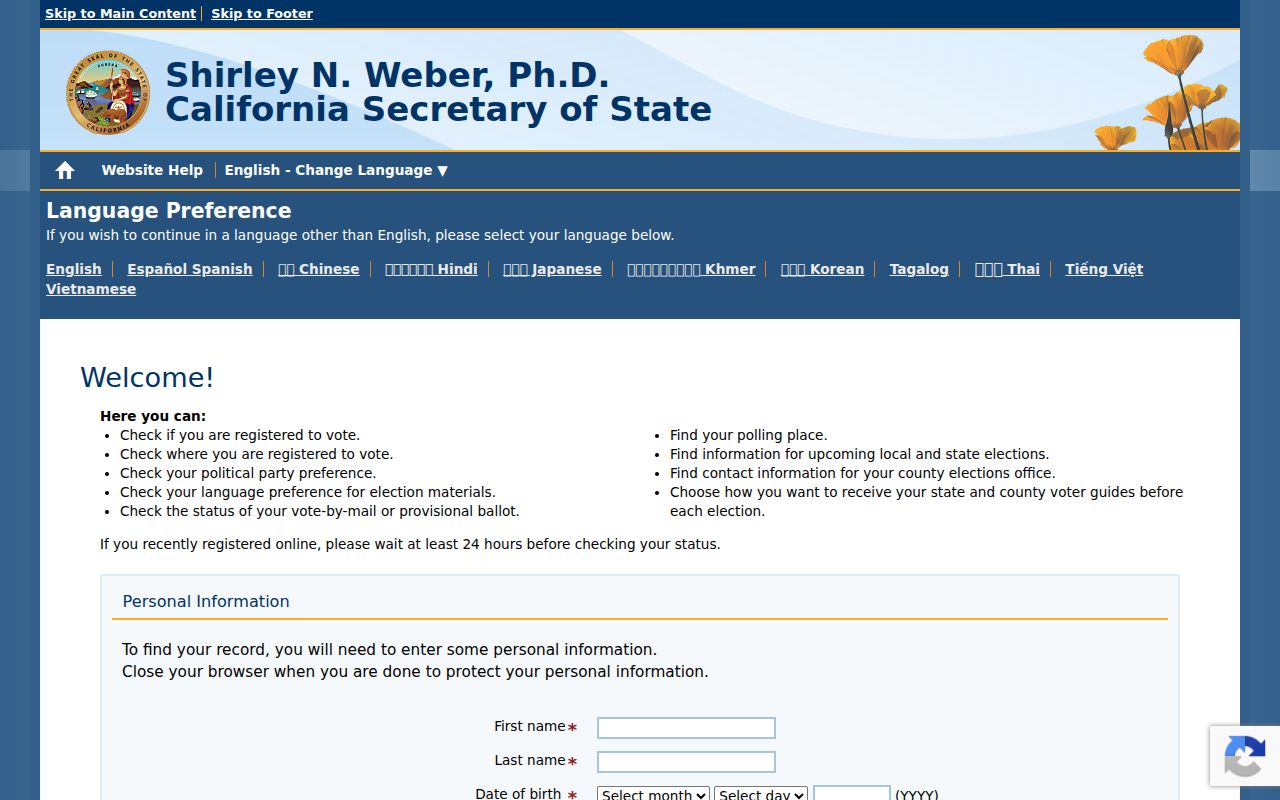
The form’s identity fields are for verification and are not returned as a public resident record.
Long Beach Court Records and Probate
The Los Angeles Superior Court Case Access gateway separates civil, criminal, family, probate, small claims, traffic, and related routes. Depending on the case type, a search can use a case number or party name, with filing year, courthouse, or district filters. A result may show case number, title, filing date, party roles, counsel, status, hearings, events, and disposition entries.
Long Beach matters do not belong to a city municipal court. The Long Beach Courthouse is at 275 Magnolia Avenue, but assignment depends on case type and filing district. Remote access is narrower than public counter access. Sealed, juvenile, adoption, confidential family, protected medical, and redacted records remain unavailable or limited. For a key pleading, use the case number and exact docket title or date when ordering a copy from the clerk or Archives and Records Center.
Probate can bridge a past owner to an estate, petitioner, personal representative, heir, or counsel. It still does not prove that every interested person lived at the property. Compare the probate record with a deed, obituary, directory entry, or other dated source.
Note: a party-name hit identifies a case connection, not the identity, conduct, or present location of a similarly named Long Beach resident.
The Los Angeles Superior Court case-access gateway is the official starting point for a public case index.
Use the case number and exact event title when a clerk or archive request needs a specific document.
Long Beach Vital Records Take Different Routes
Birth, death, marriage, and divorce records are not one lookup family. Long Beach Health and Human Services is the local registrar for births occurring in Long Beach from 1905 to the present and deaths occurring in Long Beach from 2002 to the present. Los Angeles County RR/CC and the California Department of Public Health provide county and statewide routes when the event belongs elsewhere. A Long Beach postal label alone does not establish the event jurisdiction.
California distinguishes authorized certified copies from informational certified copies. An informational copy is available to the public for a nonconfidential birth, death, or public-marriage record and is marked as not valid to establish identity. An authorized copy requires an eligible requester and a sworn statement. Mailed authorized requests need a notarized statement. Confidential marriage records are limited to a spouse or court order under Family Code sections 509 through 511.
Divorce decrees come from the Superior Court. CDPH can issue a Certificate of Record for divorces filed from 1962 through June 1984, but it is an index-style certificate with names, county, case number, and date, not the decree’s terms. County, city, vendor, mail, and in-person channels all have their own current forms, fees, identity checks, and processing times.
Long Beach Business Records Add Context
A person may appear in Long Beach records through a company, trade name, professional license, or city business license rather than a residential record. The California Secretary of State bizfile search can show entity name, file number, status, agent, and filing addresses. Los Angeles County fictitious-business-name statements can connect a trade name to a registrant or entity. Long Beach Finance handles city business-license applications, renewals, taxes, fees, and inquiries.
The California Department of Consumer Affairs license search can show a licensee or business name, license number, status, dates, and discipline links where the board supplies them. Business, agent, and license addresses are affiliation clues. They are not automatically homes, and a filing can remain public after a person’s role or address changes.
California’s Alcoholic Beverage Control lookup adds a useful geographic option because its reports can be organized by city, ZIP, county, or census tract. That helps with commercial history in a Long Beach neighborhood without converting a business listing into a household claim.
The California State Controller unclaimed-property search is another official name-based route for a Long Beach records workflow.
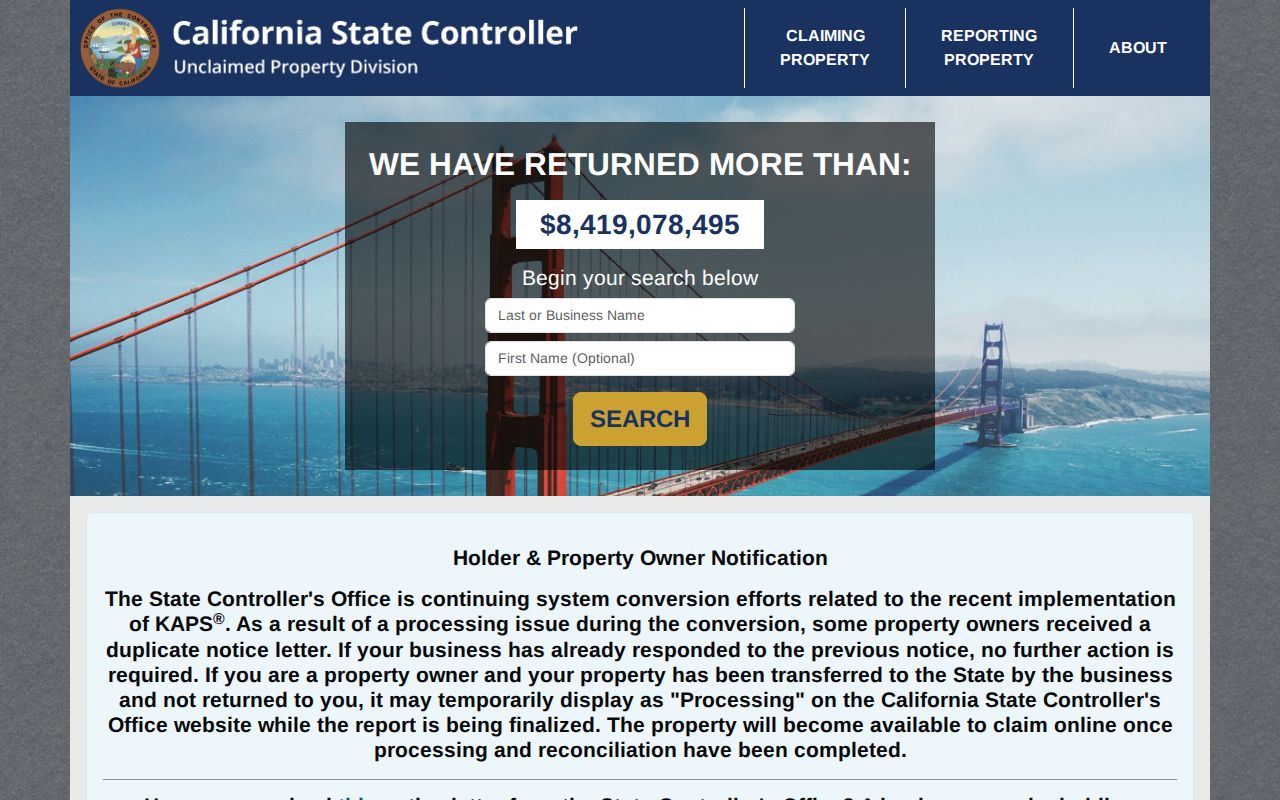
Search is free through the state, and a finder should never replace the Controller’s official claim instructions.
Long Beach Privacy Records Need Shields
California privacy rules shape what a residents directory can show. The CCPA and California Privacy Rights Act provide rights to know, delete, correct, opt out of sale or sharing, and limit certain sensitive uses when a covered business holds the information. Government-record information is treated differently. A broker deletion request does not amend an accurate assessor, deed, court, voter, or vital record.
California’s Delete Request and Opt-out Platform, called DROP, opened January 1, 2026. The Attorney General reported more than 225,000 California enrollments in its first six weeks. Registered brokers begin recurring access and processing duties on August 1, 2026. The official DROP portal and California broker registry are the correct starting points for commercial-data deletion.
Safe at Home serves eligible survivors and specified public-facing workers through a designated mailing address and forwarding program. Government Code sections 6205 through 6211 and 6215 through 6216 govern the program. The program can shield a qualifying address in public records, but it does not erase identity or every old record. A protected gap should be treated as a safety feature.
Lawful use. Long Beach records are for personal, lawful research, family history, civic information, and safe reconnection. Never publish personal details to stalk, harass, intimidate, or harm another person.
Historical Long Beach Resident Directories
The Long Beach Public Library holds the strongest local historical layer. Its Long Beach History and Special Collections page describes city directories, newspapers, clipping files, photographs, yearbooks, cultural-heritage surveys, and Sanborn fire-insurance maps. The verified digital Polk run covers most years from 1899 through 1969. Search by surname and address, then inspect scanned pages because OCR can miss initials and broken type.
Billie Jean King Main Library, 200 W. Broadway, uses appointment access for the Long Beach History Collection. Staff can help locate physical or microfilm volumes, missing digital years, reverse sections, and local newspapers. The library’s Daily Telegram, Evening Tribune, Independent, Long Beach Press, and Press-Telegram microfilm adds obituaries, notices, and address clues. The full historical shelf belongs on the Long Beach city directories page, where entry fields and year-by-year tracing receive more room.
For a past household, a city directory is a dated listing, not a complete census. Children, boarders, other household members, transient residents, and people missed by enumeration may be absent. Pair directory entries with census schedules through 1950, newspaper notices, yearbooks, deeds, permits, and Sanborn maps.
The Long Beach digital archive gateway gives the directory collection a direct starting point.
Long Beach History Records Change
Long Beach’s record trail predates the modern city. The community grew through Rancho Los Cerritos and Rancho Los Alamitos, Willmore City, incorporation changes, oil development, port growth, and later neighborhood expansion. County deeds can therefore use county, rancho, township, or community context that does not look like a modern Long Beach address.
The March 10, 1933 earthquake killed 120 people and caused an estimated $50 million in damage. Repair and reconstruction permits, city files, local newspapers, historic surveys, and later directory entries can explain why a building or household appears to change at once. The event also led to California’s Field Act for earthquake-resistant public-school construction.
Signal Hill is a separately incorporated city surrounded by Long Beach. A postal “Long Beach” clue, neighborhood name, or visual map connection can point to a different municipal permit or council custodian. Compare the parcel’s city, the official boundary map, and the record office before calling someone a Long Beach resident.
Note: the safest Long Beach lookup preserves the record’s date, source, relationship, and jurisdiction instead of flattening every clue into a resident label.